
A bipartisan group of US Senators has agreed to fast-track a bill allowing the President to impose sanctions on major purchasers of oil from Russia and Iran. This legislation, known as the Lindsey O. Graham Sanctioning Russia and Iran Act of 2026, aims to restrict funding for Russia's war efforts and Iran's energy and weapons sectors, potentially impacting countries like China and India through tariffs and other restrictions.

Finance Minister Nirmala Sitharaman has called upon Indian industry to prioritise not just scale but also resilience, better governance, and deeper technological capabilities to achieve the 'Viksit Bharat' goal by 2047.

Prime Minister Narendra Modi and Russian President Vladimir Putin held extensive discussions to strengthen bilateral trade, defence, and energy cooperation, while also addressing the ongoing Ukraine conflict and exploring avenues for peace and resolution, with Modi reiterating India's call for dialogue and diplomacy.

The Modi government is launching a 'One Day, One University' programme, sending Union ministers to universities daily to engage with Gen Z, address their concerns, and inform them about government schemes. This initiative follows recent student protests over the NEET paper leak and aims to foster better understanding between the youth and the government.
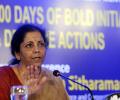
Union Finance Minister Nirmala Sitharaman expressed strong confidence in India achieving over 10 per cent economic growth, advocating for increased technology adoption and innovation. She urged overcoming scepticism and highlighted technology's transformative role in agriculture and public sector reforms, while also launching a new fund and book at an IIT Madras event.

US Secretary of State Marco Rubio stated that significant progress has been made in negotiations with Iran to reopen the Strait of Hormuz, a critical global shipping lane. However, President Donald Trump remains cautious, vowing not to accept a 'bad deal' regarding Iran's nuclear programme and regional stability.

The two-day meet of the 120-nation grouping, which began with the national anthem of Iran followed by the recitation of the verses from the holy Quran, was inaugurated by Iran's supreme leader Ayatollah Ali Khamenei at the leaders' Summit hall in Northern Tehran.

US President Donald Trump has claimed that Iran has accepted "just about everything" the United States has demanded in ongoing indirect nuclear negotiations, particularly regarding denuclearisation. He also asserted that American forces repeatedly carried out military strikes that crippled Tehran's military infrastructure, including radar installations, and escorted commercial oil tankers through the Strait of Hormuz. Trump dismissed reports of Iran's strength, stating its military and economy were severely weakened.

The US military is considering a new wave of military operations in Iran, including potential strikes on infrastructure and securing Iran's stockpile of enriched uranium, amid a fragile ceasefire and stalled nuclear talks.

The US and Iranian delegations left Pakistan after failing to reach an agreement in historic talks aimed at resolving the West Asia conflict and stabilising global energy markets.

US Special Envoy Steve Witkoff and Iranian Foreign Minister Abbas Araghchi are reportedly heading to Switzerland for a new round of US-Iran negotiations, following a recently announced memorandum of understanding to end hostilities in West Asia and a ceasefire between Israel and Hezbollah.

The question for the next 20 years is not whether India can become a $5 trillion or $10 trillion economy. Those are attractive targets, but the real question is whether India can create enough productive jobs, educate its children properly, make its cities liveable, and give hundreds of millions of people a substantially better life, asserts Ramesh Menon.

A potential agreement between the United States and Iran, including a comprehensive ceasefire and gradual lifting of US sanctions, may be announced soon, according to reports. The agreement aims to de-escalate tensions and establish a framework for resolving disputes.

US Vice President J D Vance is currently in Switzerland, leading critical technical talks with Iran to advance diplomatic efforts on Iran's nuclear programme and secure a lasting ceasefire in Lebanon, following a recently signed memorandum of understanding aimed at de-escalating West Asian hostilities.

A top Iranian official has blamed the US and Israel for the disruption of global supply chains due to the West Asia conflict, stating that Tehran is not happy about the consequences faced by countries like India.

The move is meant to enhance the operational capability of the armed forces, reduce import dependence and increase domestic value addition.

The United States and Iran have reached an agreement in principle to immediately and permanently halt all military operations, lift sanctions, and work towards a comprehensive final agreement within 60 days, including a significant reconstruction package for Iran.

The White House has not announced any decision following US President Donald Trump's meeting with his national security team regarding Iran, despite Trump's earlier indication that the discussion would lead to a 'final determination' on the matter.

Iran blames the US for 'maximalism' and 'shifting goalposts' leading to the collapse of the Islamabad talks.

US President Donald Trump has claimed that Iran's missile capabilities have been severely degraded, saying Tehran now possesses only a fraction of the arsenal it had before recent hostilities.

Iran has submitted its latest proposal aimed at advancing negotiations to end the ongoing West Asia conflict with the US, days after the Islamic Republic submitted a fresh proposal through regional intermediaries to cease its military operations in the Strait of Hormuz, which is likely to get rejected by Washington.

In a lengthy post on Truth Social, Trump said negotiations with Iran were 'proceeding nicely' and argued that several Muslim and Arab nations should formally recognise Israel and join the Abraham Accords once a deal is reached.
Pakistan will continue the development of its nuclear and missile programmes, which are the minimum level of deterrence required for the country's defence, Prime Minister Yousuf Raza Gillani said on Thursday.Gillani made the remarks during a visit to the Strategic Plans Division, the tri-services body that maintains Pakistan's nuclear arsenal, and the Joint Staff Headquarters at Chaklala in the garrison city of Rawalpindi.
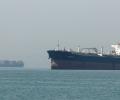
A high-stakes memorandum for a 60-day ceasefire between the United States and Iran is in its final stages, with negotiators working to close remaining gaps and avert further escalation in the region, including reopening of the Strait of Hormuz and the resumption of Iranian oil sales, according to an Axios report citing US officials.

US President Donald Trump on Tuesday claimed that Iran is in a "state of collapse" and has requested the United States to help "open" the Strait of Hormuz.
The prime minister made it clear that no constraint had been placed on India's right to construct new facilities for strategic purposes.
Pakistan launched its nuclear weapons programme after its 1971 military defeat to India in order to 'augment its inferior conventional forces,' a Congressional report has said."Pakistan's nuclear energy programme dates back to the 1950s, but it was the loss of East Pakistan (now Bangladesh) in a bloody war with India that probably triggered a political decision in January 1972 (just one month later) to begin a secret nuclear weapons programme," the Congressional report said.

Speaking to North Korea's Supreme People's Assembly on Tuesday, Kim accused the United States of carrying out 'terrorism and invasions' across regions, referring to the ongoing conflict involving Iran.

The United States and Iran could resume negotiations as early as next week in Islamabad, according to a report by The Wall Street Journal citing people familiar with the matter.

Prime Minister Narendra Modi, addressing the SCO summit in Bishkek, called for a united front against terrorism and its financing, rejecting double standards. He emphasised resolving conflicts through dialogue and diplomacy, not battlefields. Modi also highlighted that connectivity projects must respect national sovereignty and territorial integrity, a veiled reference to China's Belt and Road Initiative. India's vision for SCO rests on security, connectivity, and opportunity.

US President Donald Trump is inclined to reject Iran's latest diplomatic proposal, which suggests restoring maritime traffic through the Strait of Hormuz while deferring nuclear programme concerns, according to CNN. Concerns remain over Iran's nuclear enrichment and internal government fractures.

US-Iran talks in Islamabad collapsed after 21 hours, exposing deep divisions over nuclear ambitions and sanctions.
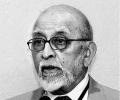
M R Srinivasan focused on the peaceful use of nuclear power at a time when the popular view among the 'hawks' was that India should build a nuclear arsenal as a deterrent.

Pakistan's Chief of Defence Forces Field Marshal Asim Munir held talks with Iranian leaders in Tehran to help resolve the conflict between the US and Iran, following a recent ceasefire agreement.

Pakistan Prime Minister Shehbaz Sharif announced that a US-Iran peace deal is on the verge of finalisation, potentially within the next 24 hours, marking a significant diplomatic breakthrough after months of intense negotiations.
Rejecting some critics' argument as to what message the US was sending to Iran by signing a nuclear energy deal with India, Burns said, "We don't see the connection between what Iran is doing and what India seeks to do."

Talks between Iran and the US in Pakistan concluded without a deal due to disagreements over key issues, including Iran's nuclear programme and sanctions, despite efforts to find common ground.

India has commissioned its new indigenously-built nuclear-powered ballistic missile submarine INS Aridaman into service, further strengthening the naval component of its nuclear triad. Defence Minister Rajnath Singh also highlighted the Indian Navy's role in securing maritime trade routes.
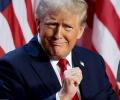
US President Donald Trump announced that a deal to end the war with Iran would be signed on Sunday, with the strategic Strait of Hormuz immediately becoming 'open to all'. This follows indications from Pakistan that negotiations were in their final stages, though Iran has yet to comment on the timeline.

Successful interceptor, anti-ship, MIRV and hypersonic technology tests have strengthened India's position among a select group of advanced missile powers.
